
Few places on Earth tell a story as vividly as Pompeii. Frozen in time by a single catastrophic afternoon nearly two thousand years ago, this Roman city still surprises historians, travellers and trivia lovers alike. So when a stunning image of its ruins shows up on the Bing homepage, it is no surprise that the bing pompeii quiz becomes one of the most talked-about challenges of the week.
Whether you are hoping for a perfect score, trying to understand why a certain answer was correct, or simply curious about life beneath the shadow of Mount Vesuvius, this guide has you covered. Below you will find the essential history, the facts most likely to appear in questions, a set of original practice questions with explanations, and proven strategies to help you answer faster and more accurately.
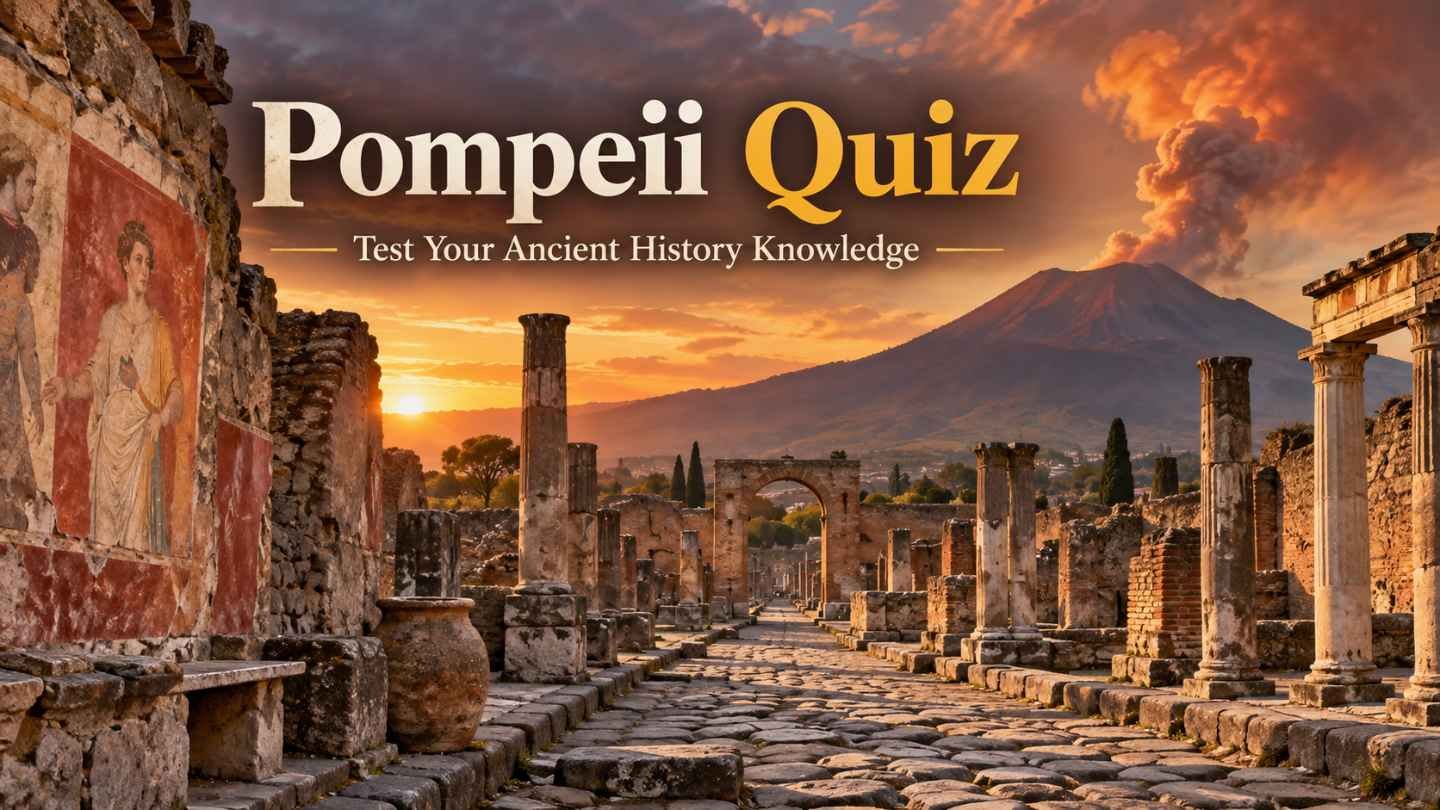
What Is the Bing Pompeii Quiz?
Every day, Microsoft Bing features a striking photograph on its homepage, often of a famous landmark, a natural wonder or a historic site. Alongside that image, Bing offers a short interactive quiz — usually three multiple-choice questions — that encourages visitors to learn something new about the subject of the day. When Pompeii takes the spotlight, the quiz naturally focuses on the ancient city, the volcano that destroyed it and the remarkable discoveries made there since.
The Bing Pompeii Quiz is part of a much larger family of daily challenges. If you enjoy this one, the bing homepage quiz archive is a great place to keep practising, since questions often revisit themes such as ancient civilisations, volcanoes and UNESCO World Heritage Sites.
How to Play and Where to Find It
Playing is simple and takes only a minute or two:
- Open the Bing homepage on desktop or in the Bing app on your phone.
- Look for the quiz prompt near the daily image, often labelled as a quiz or a "test your knowledge" link.
- Answer each question by picking one of the available options. Bing reveals whether you were right and shares a short explanation.
- Review the results at the end and see how your score compares.
Because the homepage changes daily, a particular quiz can disappear quickly. That is why many players bookmark weekly quiz, where past Bing quizzes, answers and themed challenges are collected so you can play or revisit them any time.
The Story of Pompeii in Brief
A thriving Roman town
Pompeii sat on the fertile plain near the Bay of Naples in the Campania region of southern Italy. Originally settled by the Oscan people, it later came under Samnite influence and eventually became a Roman colony in 80 BC. By the first century AD it was a busy, prosperous town with an estimated population of around 10,000 to 12,000 people. Its streets were lined with shops, bakeries, taverns, bathhouses, temples and elegant villas decorated with colourful frescoes and mosaics.
Warning signs ignored
In AD 62 a powerful earthquake shook the region, damaging many buildings. Romans did not understand that Vesuvius was an active volcano, so few people connected the tremors with any greater danger. Repairs were still under way seventeen years later when disaster struck.
The eruption of AD 79
When Vesuvius erupted, it first sent a towering column of ash and pumice high into the sky, which then rained down on Pompeii for hours, collapsing roofs under its weight. The following morning, a series of pyroclastic surges — fast-moving avalanches of scorching gas and volcanic debris — swept through the town, killing those who had not yet escaped. Pompeii ended up buried under roughly four to six metres of volcanic material. Nearby Herculaneum, Stabiae and Oplontis were also destroyed.
An eyewitness account
Almost everything we know about the eruption as it happened comes from Pliny the Younger, who watched from Misenum across the bay. Years later he described the events in two letters to the historian Tacitus. His uncle, the naturalist and naval commander Pliny the Elder, sailed toward the danger to attempt a rescue and died on the shore at Stabiae. In his honour, volcanologists today call this type of explosive eruption a Plinian eruption.
Rediscovery
For centuries Pompeii lay forgotten. Workers stumbled on remains in the late 1500s while digging a canal, but they did not realise what they had found. Formal excavations began in 1748 under the Bourbon rulers of Naples, following earlier digging at Herculaneum. In 1863 archaeologist Giuseppe Fiorelli developed the technique of pouring plaster into the hollows left by decomposed bodies in the ash, creating the haunting casts that remain among the most famous images of the site.
Key Dates Timeline
- c. 7th–6th century BCEarly settlement of Pompeii by the Oscans.
- 80 BCPompeii becomes a Roman colony under the dictator Sulla.
- c. 70 BCThe amphitheatre is built — the oldest surviving stone amphitheatre of its kind.
- AD 62A major earthquake damages the town.
- AD 79Mount Vesuvius erupts and buries Pompeii, Herculaneum and neighbouring settlements.
- 1748Systematic excavations of Pompeii begin.
- 1863Giuseppe Fiorelli introduces the plaster cast technique.
- 1944Vesuvius's most recent eruption, during the Second World War.
- 1997Pompeii, Herculaneum and Torre Annunziata are inscribed as a UNESCO World Heritage Site.
- 2018A charcoal inscription suggests the eruption may have happened in October rather than August AD 79.
Must-Know Facts for Quiz Takers
These are the details that tend to appear in Pompeii trivia. Skim the table before you play and you will recognise the right option instantly.
| Topic | Key Fact |
|---|---|
| Location | Campania, southern Italy, near modern Naples |
| Volcano | Mount Vesuvius, the only active volcano on mainland Europe |
| Year of destruction | AD 79 |
| Eyewitness | Pliny the Younger, in letters to Tacitus |
| Famous victim | Pliny the Elder, who died at Stabiae |
| Eruption type named after | Pliny — the "Plinian" eruption |
| Plaster casts pioneer | Giuseppe Fiorelli, 1863 |
| Famous mosaic | The Alexander Mosaic from the House of the Faun |
| Famous warning sign | "Cave Canem" (Beware of the Dog) mosaic |
| Sister city also buried | Herculaneum |
| UNESCO status | World Heritage Site since 1997 |
Everyday life details worth remembering
- Street food was popular. Archaeologists have identified dozens of thermopolia, counters where Pompeiians bought ready-made hot food and drink.
- Graffiti is everywhere. Thousands of messages scratched into walls include election slogans, jokes, love notes and advertisements.
- Garum was a local speciality. This fermented fish sauce was a staple condiment across the Roman world, and Pompeii was known for producing it.
- Carbonised bread survived. Whole loaves were found preserved in bakery ovens, still showing the marks where they were divided.
- Stepping stones crossed the streets. Large raised blocks let pedestrians cross without stepping into water and waste, while cart wheels passed between them.
Practice Questions with Answers
Test yourself before tackling the real thing. Tap each question to reveal the answer and a short explanation. These are original questions written to help you prepare, not a copy of any specific Bing quiz.
1. Which volcano destroyed Pompeii?A) Mount Etna · B) Mount Vesuvius · C) Stromboli
2. In what year did the eruption bury Pompeii?A) 44 BC · B) AD 79 · C) AD 410
3. Who left the only surviving eyewitness account of the eruption?A) Pliny the Younger · B) Seneca · C) Virgil
4. How were the famous body casts of Pompeii made?A) Carved from marble · B) Plaster poured into hollows in the ash · C) Molded from clay by Roman survivors
5. What does the Latin phrase "Cave Canem," found in a Pompeii mosaic, mean?A) Welcome, friend · B) Beware of the dog · C) House of the poet
6. Which neighbouring town was also buried by the same eruption?A) Herculaneum · B) Ostia · C) Paestum
7. When did Mount Vesuvius last erupt?A) 1631 · B) 1906 · C) 1944
Tips to Score Higher
- Read the image caption first. The homepage description frequently hints at one or more answers.
- Anchor your dates. Remember AD 79 for the eruption and AD 62 for the earthquake. Many timing questions revolve around these two years.
- Separate Pompeii from Herculaneum. Pompeii was covered mostly by ash and pumice; Herculaneum was buried deeper by pyroclastic flows and has better-preserved organic material.
- Know the people. Pliny the Younger (the witness), Pliny the Elder (the victim) and Giuseppe Fiorelli (the casts) cover most "who" questions.
- Eliminate the obvious wrong options. Narrowing three choices to two instantly improves your odds.
- Practise regularly. Playing past quizzes builds pattern recognition, so recurring topics start to feel familiar.
Why Pompeii Still Fascinates Us
Most ancient sites show us monuments — temples, palaces and tombs built to impress. Pompeii shows us ordinary life. Its preserved kitchens, shop counters, shopping lists scratched on walls and footprints worn into stone steps offer an intimate snapshot of Roman daily routines that no written history could match.
Pompeii is also a living laboratory. Only around two-thirds of the city has been excavated, and new discoveries continue to make headlines, from vividly painted rooms to newly uncovered houses and inscriptions that challenge long-held assumptions. Meanwhile, the millions of people who live near Vesuvius today make the site a powerful reminder of how nature and human settlement remain intertwined.
That combination of human drama, scientific discovery and ongoing mystery is exactly why a quiz about Pompeii feels less like a test and more like an invitation to explore.
Frequently Asked Questions
Is the Bing Pompeii Quiz free to play?
Can I retake the quiz if I get an answer wrong?
Was Pompeii destroyed in August or October?
Can you visit Pompeii today?
Ready to put your knowledge to the test?
Play the bing pompeii quiz now, then explore more daily challenges on weekly quiz.